History of ASN & Neuroimaging
1895
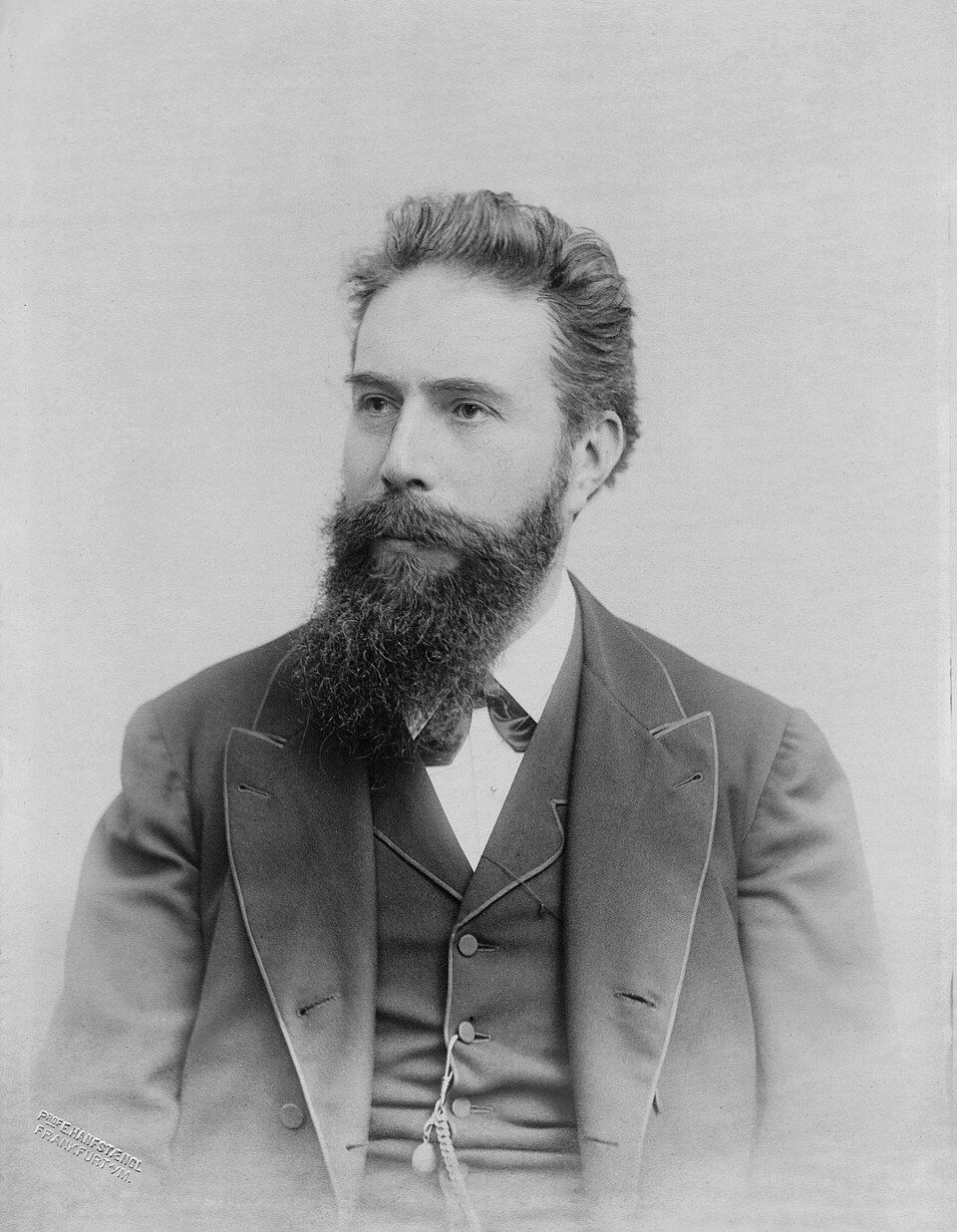
Modern neuroimaging began in 1895 when Wilhelm Röntgen produced the first radiograph, transforming medical diagnosis. In 1901, he was awarded the Nobel Prize for Physics for his discovery of x-rays, which revolutionized diagnostic medicine.
Photo of Dr. Wilhelm Rontgen courtesy of Wikipedia.
1918-1919
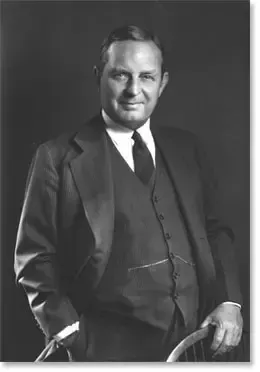
Dr. Walter Dandy, a neurosurgeon considered to be one of the founding fathers of neurosurgery, introduced ventriculography and pneumoencephalography in 1918–1919.
Photo of Dr. Walter Dandy courtesy of Congress of Neurological Surgeons
1927
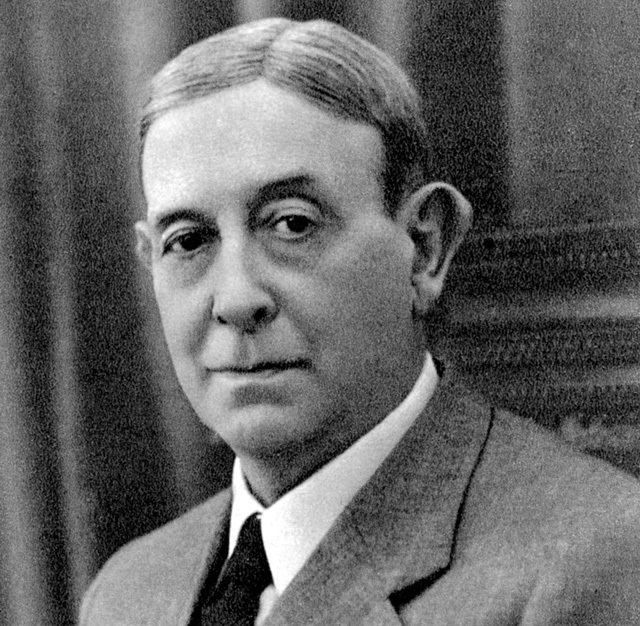
Dr. Egas Moniz, a neurologist awarded Nobel Prize in Medicine, performed the first cerebral arteriogram in 1927.
Photo of Dr. Egas Moniz courtesy of alchetron.com.
1961
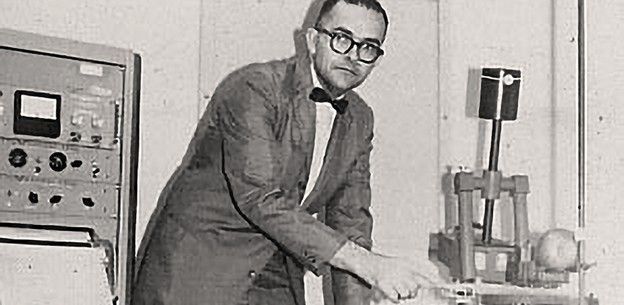
Trained in programs that required neurologists to perform invasive studies themselves, Dr. William Oldendorf became dissatisfied with the limitations of arteriography and pneumoencephalography.
His 1961 publication described the conceptual framework for CT scanning, yet industry leaders initially rejected the idea as impractical and unnecessary.
Despite early skepticism, Oldendorf’s work was later recognized as seminal.
Photo of Dr. William Oldendorf courtesy of spie.org.
1973
Although his concept was initially dismissed by X-ray manufacturers, electrical engineer Godfrey Hounsfield successfully developed the first clinical CT scanner in 1973.
Photo of Godfrey Hounsfield courtesy of britannica.com.
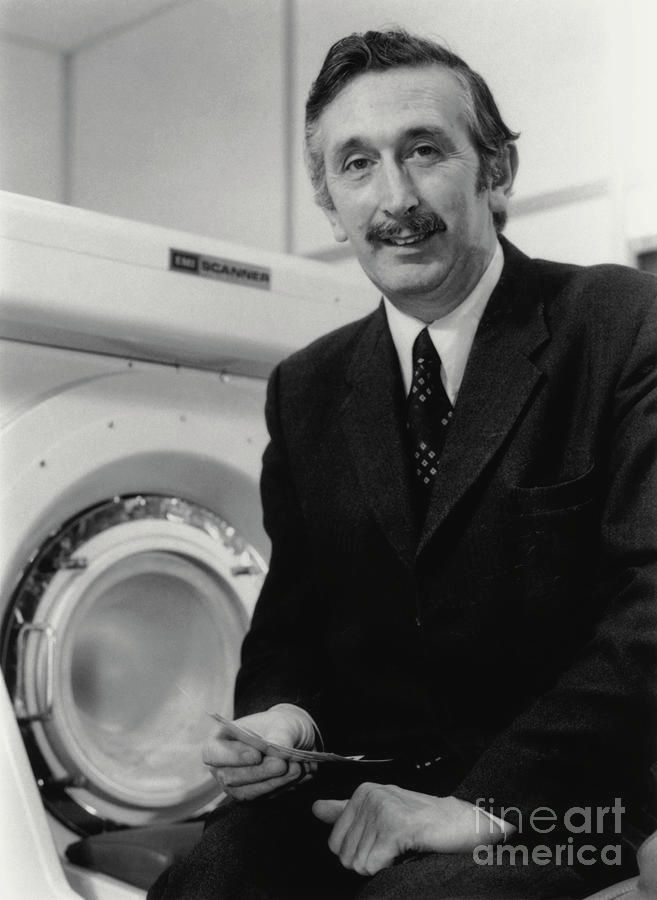
1970's
As CT scanners entered U.S. hospitals in the early 1970s, neurologists quickly recognized their transformative impact. Leaders including Dr. William Kinkel, Dr. James Toole, and others advocated within the American Academy of Neurology (AAN) and the American Neurological Association (ANA) to ensure neurologists remained central to imaging’s development and interpretation.
In 1975, both organizations formally resolved that neuroimaging was integral to the practice of neurology and that neurologists must be involved in decision-making, performance, interpretation, and education related to these technologies. This marked a pivotal moment—firmly planting neurology’s flag in the rapidly advancing field of neuroimaging and laying the groundwork for the future of organized neuroimaging within the specialty.
By the mid-1970s, magnetic resonance imaging (MRI) emerged with Paul Lauterbur, a PhD physicist, producing the first spatially differentiated MR images and Dr. Raymond Damadian, an internist, demonstrating its potential in tumor detection.
1976
In September 1976, Dr. William Kinkel organized the first Neurology Computed Tomography Symposium at the Dent Neurologic Institute in Buffalo, New York. Thirty neurologists attended the meeting, which grew out of the 1975 Ad-Hoc Committee on Imaging of the American Academy of Neurology (AAN). There was unanimous agreement that the group should formally organize and continue meeting—an effort that led to the founding of the ASN one year later.
Photo of Dr. William Kinkel courtesy of williamkinkel.com.
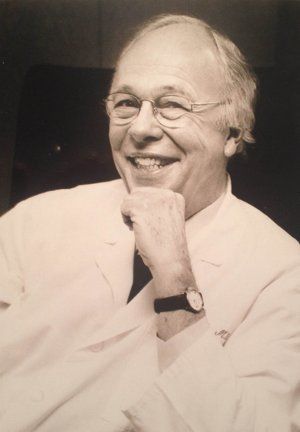
1978
Dr. William H. Oldendorf traced the development of neuroimaging in his Wartenberg lecture to the Academy of Neurology (AAN) in 1978, emphasizing the diversity among the scientists and medical specialists who contributed.
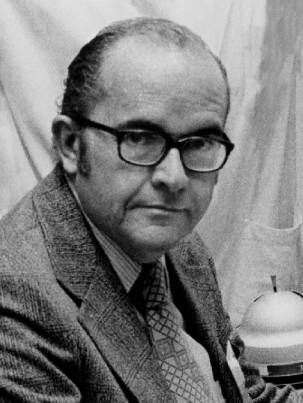
1979
Godfrey Hounsfield and physicist Allan Cormack win the 1979 Nobel Prize in Physiology or Medicine for their work. Hounsfield acknowledged Oldendorf's earlier work as foundational.
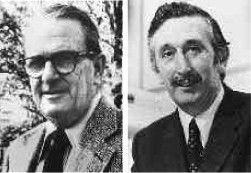
1980
Education became the Society’s central mission, keeping neurologists at the forefront of rapidly evolving imaging technologies. In 1980, Oldendorf introduced MRI to the membership by inviting pioneers Raymond Damadian and Paul Lauterbur to present their work, signaling MRI’s emerging dominance in clinical imaging.
1981
Initially named the Society for Computerized Tomography and Neuroimaging (SCTNI), the organization reflected a compromise between those focused primarily on CT and those, including William H. Oldendorf, who advocated for a broader vision of neuroimaging. Oldendorf emphasized that CT was only the beginning, and in 1981 the Society was renamed the American Society of Neuroimaging (ASN) to reflect its expanding scope.
1988
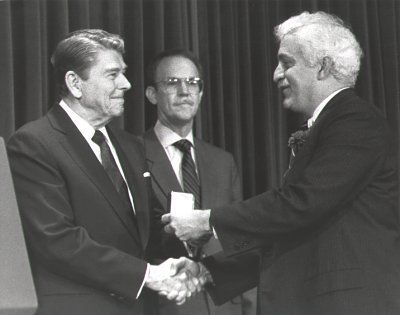
In 1988, President Ronald Reagan awarded the National Medal of Technology jointly to Damadian and Lauterbur for their contributions to the development of MRI.
Photo of President Reagan and Dr. Raymond Damadian courtesy of fonar.com
1991
ASN launched its official publication, Journal of Neuroimaging.
1998
By 1998, the Society had grown to 750 members, establishing itself as the leading professional home for neurologists in neuroimaging.
2024
In 2024, ASN launched its second publication, Clinical Neuroimaging.